Reading, writing and phonics
No items found.




Reading Curriculum Intent
To enable all pupils to read fluently and with confidence so that they can communicate their ideas and emotions to others effectively. The early teaching of reading is prioritised for all beginners when they start school at any age. Through access to high quality and challenging children’s literature, both classic and contemporary, all children and adults will establish an appreciation and love of reading. Our cross curricular approach will enable all pupils to use the skills required to access new, stimulating and challenging texts.
Sequencing and Progression
Noel Park places significant emphasis on the importance of children acquiring the skills to develop a love of reading from an early age.
For early reading we use RWI. Pupils in Reception to Year 1 receive a daily RWI session matched to their ability. All other children across the school who require support with early reading take part in our Fresh Start programme which is based around the same principals as RWI.
Pupils in Year 2-6 have daily whole class reading lessons which are text based and build on prior learning. Reading skills are taught explicitly and each year group has an overview of targets to be covered by the end of the year to ensure progression. The lessons focus on technical reading skills and comprehension as well as promoting a love of reading through high quality, engaging texts matched to the children's interests.
Book Recommendations


Writing Curriculum Intent
To provide an writing curriculum that will enable our students to be successful writers who are able to develop and apply their skills in all areas of the school curriculum and the wider world. Pupils will develop a love of writing through weekly writing for pleasure sessions, using their creativity to discuss and share their ideas. Pupils will learn how to plan, edit and evaluate their own writing. They will also develop an awareness of the audience, purpose and context, and a wide knowledge of vocabulary and grammar. They will also have regular opportunities to use and apply speaking and listening skills in English lessons and across the wider curriculum.
Sequencing and Progression
The curriculum map is designed in such a way that children are able to build on their prior learning. Key genres are revisited to enable children to build up an understanding of features and vocabulary. Core grammar, spelling and punctuation are revised each year to enable a solid understanding.
Children's knowledge of grammar, punctuation, spelling and composition is built upon throughout each year and across the year groups.
How we teach writing at Lift Noel Park
In the Early Years, children progress through the different stages of early writing through a variety of adult-led and child initiated mark making activities within the continuous provision and carpet input sessions. Children will progress from initial mark making activities towards the application of their phonics knowledge in purposeful writing activities, such as writing letters, recording recipes or making design plans and instructions in the construction area. By the end of Reception, children will be writing short sentences with words with known sound-letter correspondence and components of correct sentence structure.
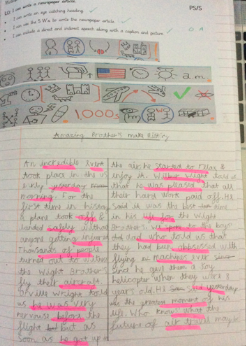
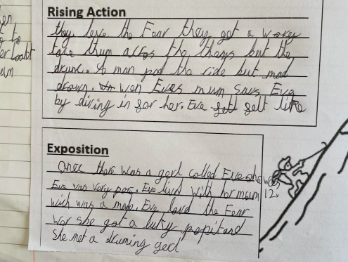
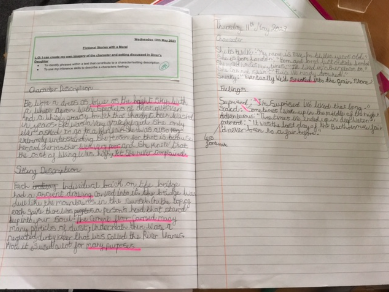
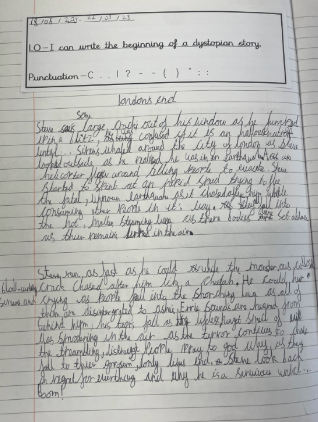
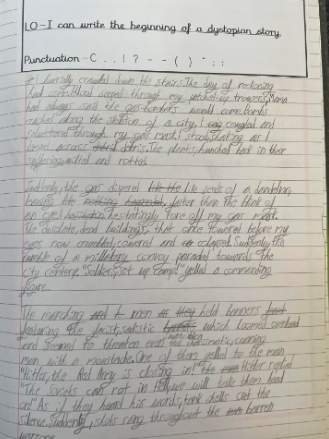
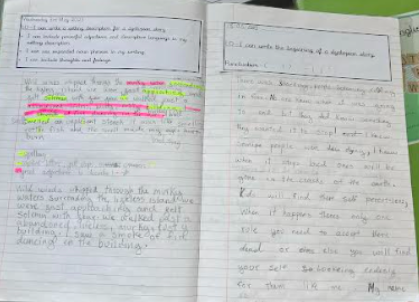
From Year 1-6, children have daily, hour long writing lessons designed and sequenced to enable progression of their compositional and transcription skills. Each new unit begins with a cold task which identifies the individual starting points for the children, with each writing unit planned to address misconceptions and teach the skills required for the genre. Every unit builds towards a final masterpiece, during which children are given the opportunity to innovate alongside demonstrating their knowledge and understanding of the skills. Key genres are revisited to enable children to build up an understanding of features and vocabulary. Core grammar, spelling and punctuation are revised each year to enable a solid understanding.
Within each lesson, there is dedicated time for the children to apply the grammar, punctuation and spelling skills learnt in their grammar lessons to their writing. By the end of KS2, children will be secondary-ready, independently able to apply their compositional, grammatical, spelling and punctuation learning to a variety of text types as well as confident in reflectively and purposefully editing and improving their own writing. Children will have been exposed to a variety of high-quality literature and will be able to apply their understanding of reading skills to understand these. They will also be able to discuss their own literary preferences and opinions.
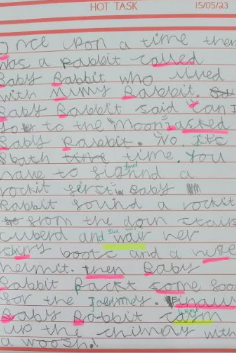
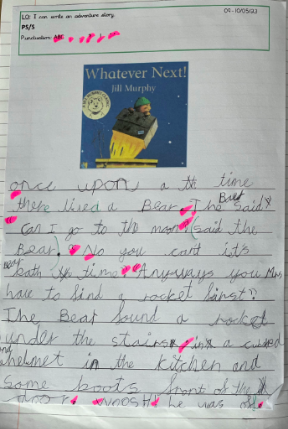
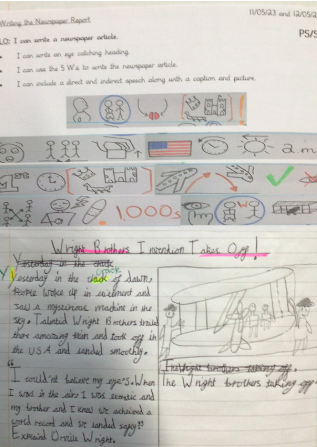
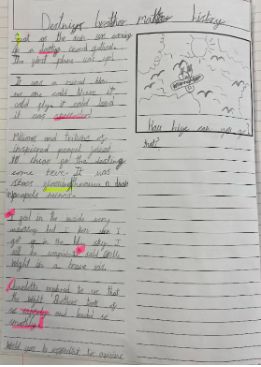
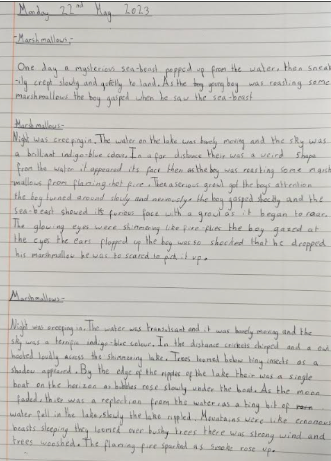
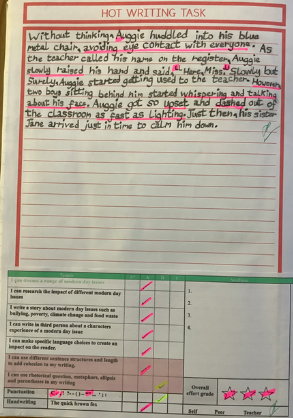
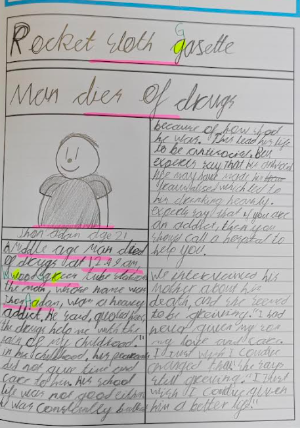
At Noel Park, we aim to promote a love of writing across the curriculum. Weekly creative writing lessons, separate from the rest of the writing curriculum, provide opportunities for children to use their imagination and creativity to respond to a range of stimuli. From videos and pictures to soundscapes, children are encouraged to choose what they would like to write, making their own stylistic and linguistic choices whilst also experimenting with new vocabulary and sentence structures. Dedicated writing for pleasure days and events such as our Black History writing exhibition give children further opportunities to write for a purpose and share their love of writing with others.



Phonics Curriculum Intent
At Noel Park, we support children in developing and applying phonetic knowledge through decoding, segmenting and blending. Through consistent teaching and regular assessment, we support children to be challenged appropriately and become resilient individuals who are able to think positively about their developing abilities and feel confident to use their phonics skills across the curriculum.
Our Curriculum
We place significant emphasis on the importance of children acquiring the skills to develop a love of reading from an early age.
At Noel Park, we have now fully implemented the Read, Write Inc. (RWI) phonics programme. We want to ensure that the transition to this programme is as smooth as possible, therefore support at home will be important to us. The below handbook aims to provide all the necessary information about RWI phonics to parents and carers, including how we teach your children phonics at school and how you are able to support your child at home.
We will also be running various Parent Workshops to help you to better understand the RWI programme and the books, videos and resources that will be shared with you at home. In the meantime, if you have any questions at all, please speak to your child's class teacher.
RWI
In Early Years and Year 1, pupils have a RWI session every day. The session takes place at the beginning of the day to allow children to apply their new knowledge and skills whilst reading and writing during the day. As well as these daily sessions, 1:1 tutoring will be given to children identified as needing more support to keep up with the teaching and make the best possible progress.
Fresh Start
Identified children in Years 3-6 will receive RWI 'Fresh Start' sessions. This is a learn to read programme that will teach the children to read quickly. It is a fast-paced, systematic programme.
Ongoing assessment
All children in the school who are being taught phonics are assessed every half term. As a result of these assessments, phonics groups and 1:1 tutoring sessions are adapted accordingly and extra support or challenge is given to individuals. Because of these half termly assessments, and the ongoing informal assessments by teachers every day, pupils who are not making the expected progress are identified early and given the extra support needed to help them to keep up with their peers.
Lift Noel Park,
Gladstone Avenue,
Wood Green, London
N22 6LH

.png)


